Leadership development program: how to structure one
How to structure a leadership development program that changes behavior: diagnosis, a staged path, practice at work, manager support and measurement.
A 40-hour path to develop mature leaders who inspire their teams and carry the company's values into every decision.
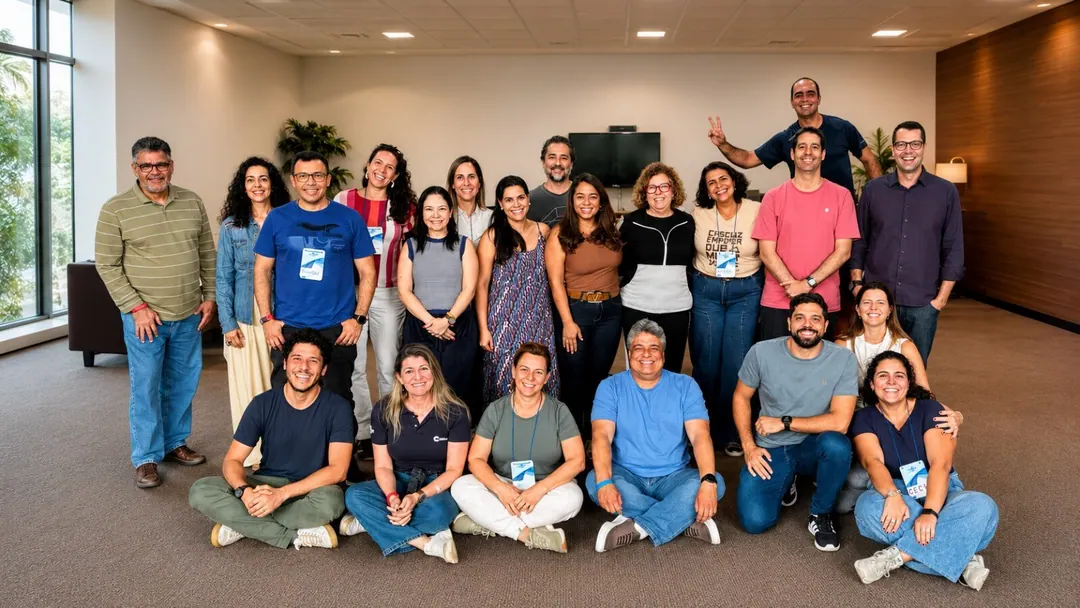
The Leadership School develops leaders through practical skills and tools that they can apply right away to improve their team's performance. It starts with a path in stages. First, self-knowledge, using personality and behavioral tools so leaders can understand where they stand today and the leader they want to become. Then comes leading through dialogue: nonviolent communication, assertive and caring communication, and more human management, and how these tools increase team engagement. Last, the leader who develops leaders: how to give and receive feedback, how to build an individual development plan, and how to prepare the team to make a difference every day. All of this in 40 hours of current, very practical content. Sessions can be scheduled in whatever way suits your company: weekends, weekdays, an afternoon or full days. What matters most is that your leaders leave confident enough to put the tools into practice and make a difference in how they lead.
40 hours · Weekdays, weekends, afternoons or full days
You can only lead others once you lead yourself. Personality and behavioral profile tools help leaders understand where they stand today and the leader they want to become. Covers self-leadership and self-leadership for results.
Nonviolent communication, assertive and caring communication and more human management, with a focus on how these techniques increase team engagement.
It is not enough to be, you have to be seen to be. Leaders become a reference and start showing in their own behavior the values the company says it holds.
How to give and receive feedback, how to build an individual development plan and how to prepare the team and future successors.
At Ativme, we believe leaders are the main people responsible for growing and protecting organizational culture. Investing in mature leaders who know how to inspire and add value to people's lives is the most direct way to build a strong, cohesive culture that matches the strategy.
The data point the same way. A Gallup study of thousands of teams found that managers account for at least 70% of the variance in engagement across business units. When leaders become agents of change, culture grows stronger and spreads across the company without the need for a campaign.
The Leadership School is designed so that leaders leave each stage with tools they can apply right away. It starts with self-knowledge, moves through communication and example, and ends at the most mature point of leadership: preparing other people to lead.
It covers 40 hours of content, and the schedule adapts to the company's routine. What matters most is that leaders leave confident enough to put the tools into practice and make a difference for their team.
Leaders who know themselves better react less on impulse, communicate better with people unlike themselves and give feedback more often and with less friction. Teams notice this kind of change first, and clients feel it later.
Want to know how to structure leadership development at your company? Read how to structure a leadership development program. If the company is not yet sure where to focus, culture mapping is a good place to start.
LEAD-O&G
For oil and gas operations, the Leadership School has a version focused on decisions under pressure, safe behavior, high reliability culture and critical communication.
The path has 40 hours of current, practical content. Sessions are scheduled with the company: weekdays, weekends, afternoons or full days.
Training is usually a one-off session on a single topic. The Leadership School is a path in stages that starts with self-knowledge and ends with the leader who develops other leaders. Between sessions, leaders apply the tools in their routine, which helps the learning stick.
Yes. The self-knowledge and dialogue stages are especially useful for people taking on their first team. More experienced leaders get the most out of the stage on developing successors.
How to structure a leadership development program that changes behavior: diagnosis, a staged path, practice at work, manager support and measurement.
Psychological safety is the belief that a team is a safe place to take risks, make mistakes and disagree. The concept, the signs, and what leaders can do.
What DISC is, where it comes from, how each style communicates and how to use the tool to improve your team without turning people into labels.
Tell us where your team is right now. One of our specialists will reply on WhatsApp to understand the context and suggest the best way forward.