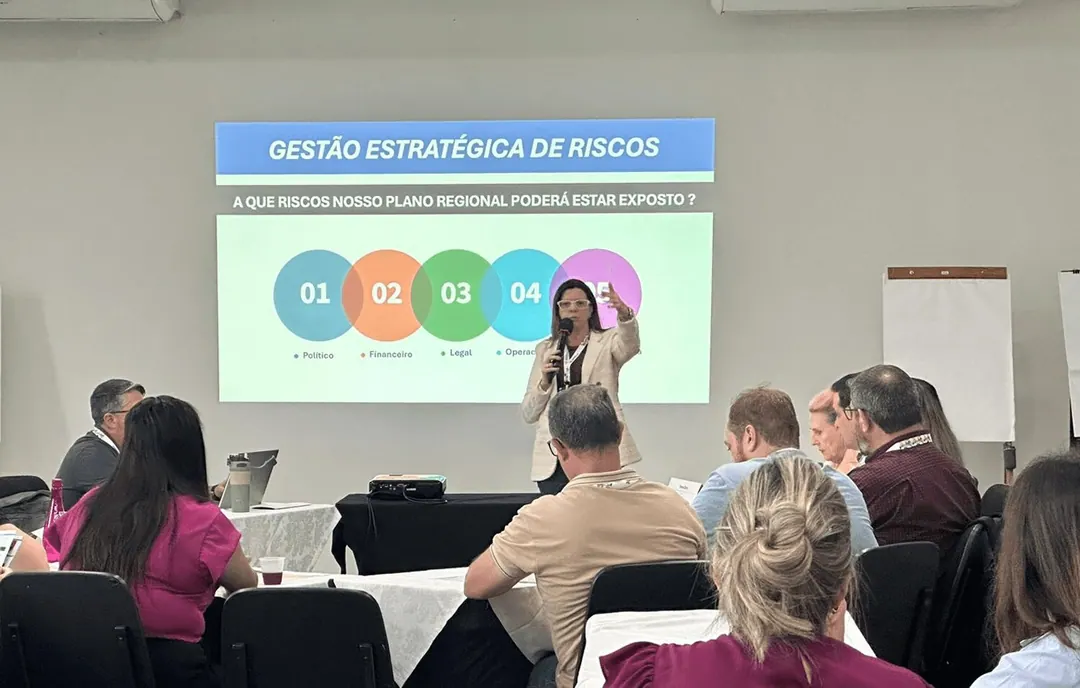
Brazil's NR-1 and psychosocial risks: what changed for employers
Since May 26, 2026, Brazil's NR-1 requires psychosocial risk factors in occupational risk management. What changed, examples, and the role of leaders.

Human development for oil and gas companies. We strengthen leadership, safety culture, critical communication and the behavioral maturity of crews to reduce human failure and make operations more reliable.
Ativme develops the human skills these challenges call for.
Talk to a specialistThe work starts with a close look at the team. Only after we understand the behavioral risks do we define what to develop and which modules to run.
Behavioral risks
We identify the team's main behavioral risks.
Skills to strengthen
We define which skills need to be strengthened.
Applied modules
We run the modules the team needs.
Each program works on a point where people's behavior weighs on the operation. They can be combined depending on what the diagnosis finds.
Develops leaders who can make decisions under pressure, run their crews and strengthen safety culture.
ForLeaders, coordinators and supervisors
One-on-one development in 8 to 10 sessions with an Ativme consultant, with the manager and HR involved at the start and at the close.
How it works LEAD MentoriaForSupervisors and coordinators
Builds operational discipline, accountability and critical communication, with a focus on reducing human failure.
ForOperations crews and supervisors
Improves interaction between teams, shift handovers and communication in the operating environment.
ForOperations, supervisors and logistics
Brings compliance into everyday behavior, working through real ethical dilemmas from the field.
ForInspection, engineering and sensitive operations
Prepares professionals for inspections, audits and supplier qualification processes.
ForAuditable teams and company representatives
Training on the human behavior behind Brazil's risk management rules (GRO and PGR), from hazard identification to conduct during audits.
ForOperations, leaders and crews exposed to risk
Brings ethics, responsibility and organizational culture into the crews' daily practices.
ForSuppliers in the oil and gas chain
Diagnosis and development of the human maturity of teams.
ForOperations and administrative teams
We work with companies in the oil and gas supply chain that operate in:
After the programs, the company is better prepared to
It is how organizations that operate in high-risk environments still manage to have few serious accidents. Researchers Karl Weick and Kathleen Sutcliffe describe five habits of these organizations: constant attention to small failures, reluctance to accept simple explanations, sensitivity to what is happening in operations, commitment to fast recovery, and deference to whoever knows the problem best, regardless of rank.
Because it is when responsibility for a task changes hands. The UK Health and Safety Executive (HSE) notes that many accidents have been caused by communication failures at shift handover, and the Cullen Report named this failure as one of the factors in the 1988 Piper Alpha disaster. HSE recommends face-to-face, two-way handovers using both verbal and written communication.
Yes. NR-1 applies to every organization with employees under Brazil's labor code (CLT). Since May 26, 2026, occupational risk management must also consider psychosocial risk factors such as overload, excessive targets, conflict and poor communication. The behavioral NR-1 program works on the human side of the GRO and PGR, together with the company's occupational health and safety lead.
It has four modules: hazard identification, decision-making and dynamic risk assessment, critical communication within the PGR (the company's risk management program), and conduct during NR-1 audits. The modules deal with the behavior of the people who carry out risk management every day, such as situational awareness, stop-work criteria, task handover and immediate reporting.
Both belong to the LEAD leadership line. LEAD-O&G is group development for leaders, coordinators and supervisors. LEAD Mentoria is one-on-one: a supervisor or coordinator has 8 to 10 sessions, every two weeks, with an Ativme consultant, with alignment meetings with their manager and HR at the start and at the close.
With a diagnosis of the team's behavioral risks. From there we define the skills that need strengthening and build the development plan. Only then do we run the modules the team needs, which can combine more than one program, such as LEAD-O&G and CCI-O&G.
Since May 26, 2026, Brazil's NR-1 requires psychosocial risk factors in occupational risk management. What changed, examples, and the role of leaders.
Why shift handover is one of the most critical moments in oil, gas and energy operations, and how leaders and crews can make it safer in practice.
Tell us about your crew and an Ativme specialist will help you work out where to start.